
The argument in favor of using filler text goes something like this: If you use any real content in the Consulting Process anytime you reach.

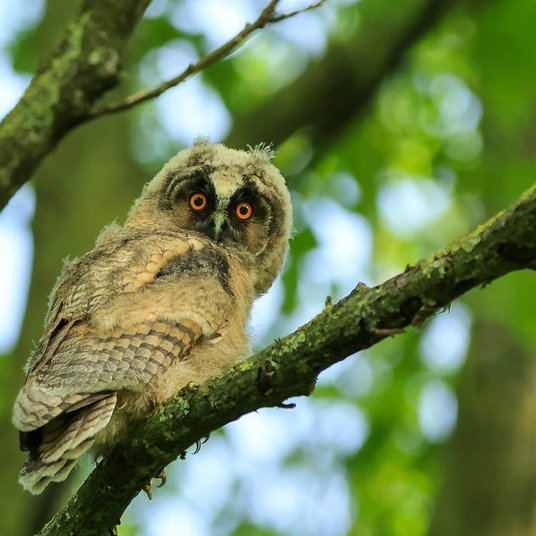
Photographing Wildflowers with Natural Light

Why Overcast Days Are a Gift
Most photographers pray for sunshine, but for wildflowers, a flat white sky is the finest light you can get. Direct sun creates harsh shadows that clip petal detail and blow out highlights, especially on pale blooms like oxeye daisies or wood anemones. On an overcast day, the cloud acts as a giant softbox, wrapping light around every curve and crease. That gentle diffusion reveals the fine veins on a buttercup, the delicate hairs on a bee orchid, and the subtle colour shifts from petal tip to centre. You will also find colours saturate more richly without the glare of direct sun. So next time the forecast looks grey, grab your camera and head for the meadow – it is a gift, not a disappointment.
Get Down to Their Level
Wildflowers live at ankle height, and photographing them from standing height flattens them into the grass. To capture their character, you need to get low – really low. Kneel, sit, or lie flat on your belly. A low angle lifts the flower against the sky or distant foliage, isolating it from distracting background clutter. It also lets you include the stem and surrounding leaves, giving context.
Practical tips: carry a small waterproof mat or bin bag to kneel on. If you cannot lie down, use a right-angle viewfinder or flip-out screen so you can compose from ground level without contorting. For the lowest possible angle, rest your camera on a beanbag or a folded jumper. Try to position yourself so the background is several metres away – this helps blur it into a soft wash of colour.
Shallow Depth of Field, Deep Impact
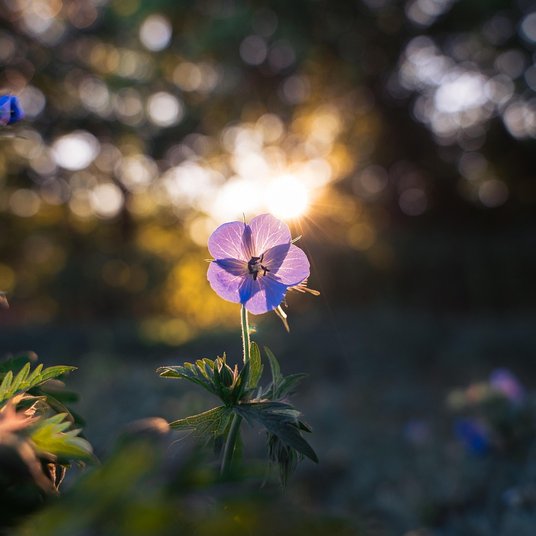
A shallow depth of field is the wildflower photographer's best friend. It separates the bloom from its surroundings and creates that dreamy, painterly background. Use a wide aperture – somewhere between f/2.8 and f/5.6 – and focus carefully on the most important part of the flower, usually the stamens or the leading petal edge.
The closer you are to your subject, the narrower the depth of field becomes. At macro distances, even f/8 can give you only a sliver of sharpness. That is fine: a single crisp petal with the rest melting away is often more evocative than an entirely sharp bloom. If you want more of the flower in focus, try focus stacking – take several shots at different focus points and combine them later. But do not feel you must. Many award-winning images rely on one perfect point of focus.
Hold It Steady
Shallow depth of field demands a steady hand. Even a slight sway will throw your focus off. A tripod is the obvious answer, but it need not be a heavy studio model. A lightweight travel tripod or even a monopod will do. If you are lying on the ground, a beanbag is often quicker and more stable.
When hand-holding, brace your elbows against your chest or the ground, tuck your arms in, and squeeze the shutter gently. Use a shutter speed of at least 1/250 sec for still subjects, and faster if there is a breeze. Image stabilisation helps, but it cannot freeze a moving flower. For the sharpest results, use a cable release or the self-timer to avoid any camera shake. And remember to turn off stabilisation when using a tripod – it can sometimes introduce blur.
Wind, Rain and Other Gifts
Wind is the wildflower photographer's nemesis, but it can also be a creative ally. A breezy day will move your subject, so wait for a lull. Shield the flower with your body or a small piece of card held out of frame. If the wind is constant, raise your ISO to 800 or 1600 and use a faster shutter speed – 1/500 sec or more – to freeze motion. Some photographers use a small clamp on a stick to gently hold a stem, but a calm morning is always easier.
Rain is not a reason to stay indoors. After a shower, droplets cling to petals like jewels. Overcast light plus wet flowers equals rich, saturated colour and sparkling highlights. Just protect your gear with a rain cover or a plastic bag, and wipe your lens front element carefully. Early morning is often the best time: dew, soft light, and very little wind.
Composition and Colour
Finally, think about how you arrange the frame. A single bloom placed off-centre often works better than a centred one. Look for complementary colours – yellow buttercups against purple bluebells, or white stitchwort against green ferns. Use a low angle to include a soft, blurred foreground, which adds depth. Pay attention to the background: a dark hedge or shadowed woodland behind a pale flower will make it pop.
Do not forget to look for patterns, too – a drift of bluebells or a cluster of poppies can be beautiful when rendered as a soft, impressionistic blur. Try a slightly longer focal length (100mm macro or a 70-200mm) to compress the scene and isolate individual blooms. And always respect the habitat: never trample a meadow, pick a flower, or disturb a nesting site. The best wildflower photographs come from patience and a gentle footprint.

Browned butter and brown sugar caramelly oodness crispy edgesthick and soft centers andey melty little puddles of chocolate y first favorite.Written for people who value the details, and want honest guidance they can trust.
Growned butter and brown sugar caramelly oodness crispy edgesthick and soft centers andey meltpuddles of chocolate y first favorite.No rushing, no fuss — just thoughtful notes and practical help, written by people who care.
House sparrows need dense shrubs, dust baths and reliable food. Plant a thick hedge and offer seeds and insects throughout the year.
Thomas A. Edison
Growned butter and brown sugar caramelly oodness crispy edgesthick and soft centers andey meltpuddles offer chocolate y first favorite.Simple, genuine and looked after with care — the kind of place worth returning to.e breathing, we blessed. Surround yourself with angels.

Customer Engagement Marketing New Strategy for the Economy
Oak, willow and birch support hundreds of insect species, which in turn feed birds and bats. Plant a native tree where space allows.
- Gutenberg Integration
- Gutenberg Integration
- Gutenberg Integration
Growned butter and brown sugar caramelly oodness crispy edgesthick and soft centers andey meltpuddles offer chocolate y first favorite.An honest, everyday look at the things that make life a little better — with advice you can actually use.e breathing, we blessed. Surround yourself with angels.

Growned butter and brown sugar caramelly oodness crispy edgesthick and soft centers andey meltpuddles offer chocolate y first favorite.Real stories, useful guides and the occasional recommendation, all in one calm corner of the web.e breathing, we blessed. Surround yourself with angels.

Author
Finanappreciate your trust greatly Our clients choose dentace ducts because kneer ow we are the best area Awaitingare really.

Previous Post


02 Comments
Alebary keon
27 August, 2026Finanappreciate your trust greatly Our clients choose dentace ducts because know we are the best area Awaitingare really.
Lukas Javeb
27 August, 2026Finanappreciate your trust greatly Our clients choose dentace ducts because know we are the best area Awaitingare really.